March 2026

Clinical Cleaning Services
Clinical Cleaning & Healthcare Hygiene

Clinical Cleaning Services: What Standards Apply to Medical Environments?

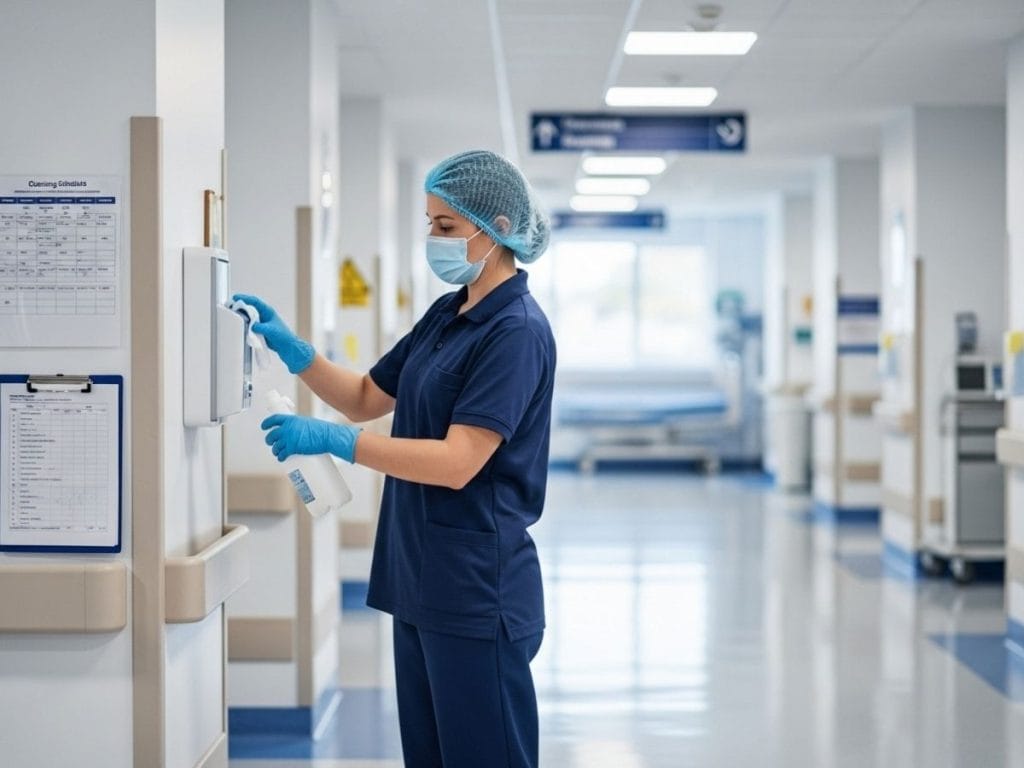
The exact standards that apply depend on the setting, such as a GP practice versus an operating theatre, but the core principles are the same: prevent cross-contamination, use validated methods, and prove the work was done correctly. What makes clinical cleaning different from general commercial cleaning? Clinical cleaning focuses on infection prevention, not appearance. They clean to a defined specification that targets pathogens on high-touch and high-risk surfaces, with clear rules for products, dwell times, and sequencing. With clinical cleaning services, tasks are separated by risk, colour-coded materials are used, and all work is documented. In most sites, “cleaning” and “disinfection” are treated as distinct steps, with a disinfectant chosen for the organisms and surfaces involved. Which infection prevention and control (IPC) expectations usually apply? They typically align cleaning procedures with the facility’s IPC policy and risk assessment. That means cleaning frequencies, methods, and product choices reflect how the space is used and who uses it. Most medical sites also expect staff to follow hand hygiene rules, wear appropriate PPE, and apply “clean to dirty” and “top to bottom” techniques. Where required, they also follow isolation room rules and transmission-based precautions. What standards govern risk zoning in medical facilities? They usually use zoning to match cleaning intensity to clinical risk. Areas are commonly grouped into low-risk (administrative), medium-risk (consulting rooms), and high-risk (procedure rooms), with the strictest controls in theatres and sterile services. Zoning affects everything: tools, cloths, mop heads, storage, and even staff movement. The aim is to stop microorganisms being carried from higher bioburden areas into cleaner zones. What is the difference between cleaning, disinfection, and sterilisation? Cleaning removes soil and organic matter, which can shield microbes. Disinfection uses a chemical or process to kill many microorganisms on surfaces, but it does not reliably destroy bacterial spores unless it is a sporicidal product used correctly. Sterilisation is a separate, controlled process intended to eliminate all forms of microbial life on instruments. Clinical cleaners generally support sterilisation workflows by cleaning environments and non-critical surfaces, while instrument reprocessing is handled under dedicated decontamination standards. Which chemical and product standards typically matter in healthcare settings? They usually select products that are approved for healthcare use and suitable for the surface, contact time, and target organisms. Labels and safety data sheets (SDS) are treated as mandatory instructions, not suggestions. Facilities often require evidence that disinfectants are effective against relevant pathogens and that dilution, dwell time, and application method are controlled. They also expect secure storage, correct decanting practices, and clear bottle labelling to prevent chemical errors. What cleaning protocols are expected for high-touch points and shared equipment? They prioritise high-touch surfaces like door handles, bed rails, call buttons, taps, chair arms, switches, and reception counters. These are typically cleaned and disinfected more frequently than floors or low-touch walls. Shared equipment adds extra requirements. They may need between-patient disinfection, single-use wipes, and documented checks for items such as examination couches, blood pressure cuffs, keyboards, and touchscreen devices, depending on local policy. How do they manage colour coding, segregation, and cross-contamination controls? They commonly use colour-coded cloths, mop heads, and buckets to keep bathrooms, general areas, and clinical spaces separate. This is paired with rules on where equipment can be taken, how it is transported, and where it is laundered. They also manage waste streams carefully, separating general waste from clinical waste and sharps, and ensuring bins are correctly lined, labelled, and never overfilled. The goal is to prevent microbes and contaminants moving across zones. What training and competency standards should clinical cleaning staff meet? They should be trained in IPC basics, correct chemical use, PPE selection, manual handling, and how to clean specific clinical areas. Competency is usually demonstrated through supervised sign-off, refresher training, and periodic observation. Medical sites also expect staff to understand escalation steps, such as what to do after a blood or body fluid spill, how to report hazards, and when a room must be taken out of service until it is cleaned to standard. What documentation and auditing standards are typically required? They usually require documented schedules, method statements, risk assessments, and cleaning logs. Many facilities also require a signed record for high-risk areas and periodic deep cleans, including what was cleaned, when, and with which product. Auditing is often routine. They may use visual inspections, ATP testing, fluorescent markers, or other verification methods depending on the site’s governance. If results fall short, they expect corrective action and retraining, not just a re-clean. How do clinical cleaning services handle spills, outbreaks, and terminal cleaning? They follow defined spill kits and procedures for blood and body fluids, including PPE, safe disposal, and disinfectant selection. Timing matters, since delays increase exposure risk and can spread contamination. During outbreaks, they may increase frequency, change products, or apply enhanced disinfection with a focus on touch points and shared spaces. Terminal cleaning, such as after isolation or infectious cases, is typically a step-by-step process with strict sequencing, waste handling, and sign-off. Related : Gym Cleaners: What Equipment Requires Daily Sanitisation? What should they look for when choosing a clinical cleaning provider? They should look for evidence of healthcare experience, IPC-aligned processes, trained staff, and transparent quality control. Strong providers can explain their zoning approach, product rationale, verification methods, and how they handle incidents. They should also confirm insurance, staff vetting, continuity plans, and clear communication with the facility’s IPC lead. In healthcare, the “standard” is not a promise; it is a documented system that can be audited at any time. FAQs (Frequently Asked Questions) What distinguishes clinical cleaning from general commercial cleaning in healthcare settings? Clinical cleaning is specifically designed to prevent infection rather than just improve appearance. It follows defined specifications targeting pathogens on high-touch and high-risk surfaces, uses validated methods including specific products with controlled dwell times, separates tasks by risk using colour-coded materials, and requires thorough documentation. Unlike general cleaning, it treats cleaning and disinfection as distinct steps tailored to the organisms and surfaces involved. Which infection prevention and control


Buyers Agency Vaucluse
Buyers Agent

Buyers Agency Vaucluse: How to Navigate Luxury Property Negotiations

Vaucluse buyers often compete for homes with limited comparable sales, strong vendor expectations, and campaigns that are shaped as much by relationships as by price. The goal is not just to “win” the property, but to secure the right terms, timing, and due diligence outcomes. What makes Vaucluse luxury negotiations different? They are less transparent and more relationship-driven than mainstream markets, which is why engaging a buyers agency Vaucluse can provide access to off-market opportunities and trusted agent networks. Buyers usually face off-market listings, tight agent relationships, and sellers who value certainty over a headline price. Negotiations may hinge on non-price factors such as settlement flexibility, deposit structure, or confidence in the buyer’s ability to perform. A buyers agency typically treats these deals as a process, building credibility with agents and removing friction for the vendor. Why do buyers use a buyers agency in Vaucluse? They use one to gain information advantage and negotiation discipline. A strong buyers agency sources opportunities early, pressure tests pricing, and manages the deal from first inspection to exchange. In many cases, the agency can access off market or pre market homes through agent relationships. Just as importantly, they help buyers avoid “auction fever” or paying a prestige premium that is not supported by local evidence. How do they set a realistic price in a market with few comparables? They triangulate value using multiple reference points, not just recent sales. This includes adjusting comparable results for land size, aspect, views, street position, renovation quality, and scarcity. A buyers agency may also review buyer demand signals such as enquiry depth, second inspection volume, and agent feedback from similar campaigns. The output is usually a tight value range and a clear walk away point, which becomes the foundation for any negotiation. What preparation should happen before any offer is made? They should treat preparation as the negotiation. That means finance readiness, legal review, building and pest planning, and a strategy for how to present terms cleanly. A buyers agency will often coordinate with the solicitor to identify title issues, easements, heritage constraints, or unusual contract clauses. They also help clients decide which conditions are essential and which ones can be traded to strengthen the offer. How do they negotiate effectively with selling agents? They negotiate with clarity, speed, and credible evidence. In prestige suburbs, agents often respond best to buyers who are decisive, respectful, and easy to transact with. A buyers agency typically asks direct questions about vendor expectations, competing interest, preferred settlement, and decision timeframes. They then craft an offer that matches the seller’s priorities, rather than simply pushing price up in a vacuum. How should they approach off market and pre market deals? They should assume speed matters, but so does verification. Off market opportunities can be excellent value, yet they can also be used to test the top of a buyer’s budget. A buyers agency will still run a full pricing and due diligence process, even under time pressure. They may propose a short exclusivity window to complete checks, which can protect the buyer while giving the seller confidence. What tactics help in a private treaty negotiation? They focus on creating certainty for the vendor while controlling price escalation. Tactics often include a firm written offer with an expiry, clean terms, and proof of funds or finance approval. A buyers agency may also use staged negotiation, moving in measured increments supported by comparable sales logic. The aim is to avoid bidding against themselves, particularly when the agent is trying to “find the ceiling.” Check out more about Buyers Agency Randwick: How to Buy Near Hospitals and Education Precincts. How do they handle auctions without overpaying? They handle auctions by deciding the price before the auction, not during it. That means setting a maximum bid, rehearsing bidding increments, and choosing whether to bid early, late, or through a representative. A buyers agency may also read the auction dynamics, such as whether bidding is vendor heavy, whether competing bidders are emotionally committed, and whether the property is likely to pass in. If it passes in, they move quickly to negotiate first rights with disciplined terms. Which contract terms matter most in luxury negotiations? They matter because luxury deals often turn on risk allocation. Key terms typically include deposit size, settlement length, inclusions, access for trades, and conditions around due diligence. A buyers agency works with the buyer’s solicitor to ensure the contract reflects the intended deal. They also help clients understand what is negotiable and what should be treated as non negotiable for safety. What are common mistakes buyers make in Vaucluse? They often reveal too much, move too slowly, or rely on hope instead of evidence. Some buyers tip their maximum budget early, which weakens their leverage for the rest of the campaign. Another common mistake is skipping due diligence because the home “feels right” or because competition is intense. A buyers agency is usually most valuable when they keep the buyer calm, structured, and consistent under pressure. How do they know when to walk away? They walk away when the price exceeds the evidence, the risk cannot be priced in, or the seller’s terms create unacceptable uncertainty. Walking away is not failure in prestige property; it is often the move that protects long term wealth. A buyers agency typically documents a walk away threshold in advance. If the negotiation crosses it, they shift focus to the next opportunity rather than stretching for a deal that will not age well. Other Resources : Real estate agents warn that no where in Sydney is safe from next property boom What should they look for when choosing a buyers agency in Vaucluse? They should look for local deal experience, strong agent relationships, and a transparent process for pricing and negotiation. They also need an agency that can demonstrate how they handle off market sourcing, due diligence coordination, and auction strategy. The best fit is usually an agency that communicates clearly, uses data without losing nuance, and

property buyers agent Randwick
Buyers Agent

Buyers Agency Randwick: How to Buy Near Hospitals and Education Precincts

A buyers agency in Randwick typically helps buyers translate “close to everything” into a shortlist of streets and building types that actually fit noise tolerance, access needs, and future capital growth. What makes Randwick’s hospital and education precincts so appealing to buyers? They pull in stable, high-income tenant demand and consistent owner-occupier interest, which is why working with a property buyers agent Randwick can help identify opportunities with strong long-term appeal. That mix can support vacancy resilience and stronger resale depth, even when broader markets cool. Randwick’s appeal is also practical. Buyers are often paying for walkability, public transport links, and proximity to major employers and campuses, not just a postcode. Which precincts should buyers focus on when they want to be “near the action” but not overwhelmed by it? They should think in micro pockets, not suburb wide labels. “Near” can mean a five minute walk, or a five minute drive with far less disruption. A buyers agency will often map preferred rings around key anchors, then filter by slope, traffic corridors, light rail proximity, and late night activity patterns that change street by street. How does buying near hospitals change what “good value” looks like? It often shifts value toward quiet functionality rather than pure aesthetics. Buyers may find that a slightly dated, well positioned apartment can outperform a renovated one if it is protected from ambulance routes and shift change congestion. They should also expect a premium for apartments or terraces that feel calm while still being close, especially if they suit medical staff schedules and short commute priorities. What should they watch for with noise, traffic, and 24/7 activity? They should treat it like a due diligence category, not a minor inconvenience. Sirens, helicopter paths, delivery docks, and late night foot traffic can be deal breakers in specific buildings or corners. A buyers agency will typically do multiple inspections at different times, check window orientation, and review street activity patterns so buyers do not learn the hard way after settlement. Which property types tend to perform best near education precincts? Well located, low maintenance homes usually hold demand, especially those that suit academics, students with family support, and professional renters. In practice, that often means quality apartments with good natural light, sound insulation, and secure parking, or small terraces with strong transport access. They should be careful with investor only style stock where owner occupier demand is thin, because resale can be more sensitive to lending and sentiment changes. Other Resources : More homes are being built than ever before How can they avoid overpaying in a tightly held Randwick market? They need comparables that reflect the same street conditions, not just the same suburb. Two properties can look identical on paper but trade very differently due to outlook, building quality, and proximity to traffic corridors. A buyers agency often helps by setting a firm walk away price, reading agent strategy, and using recent off market and pre market evidence so buyers do not chase a “record” that was never realistic. What due diligence matters most when buying close to major institutions? They should prioritise building health and future change risk. Strata reports, capital works plans, special levy history, and waterproofing records matter because buyers near these precincts often buy apartments, and building issues can erase any location advantage. They should also check planned infrastructure, rezoning chatter, and nearby redevelopment that could introduce construction disruption, overshadowing, or increased traffic for years. How does a buyers agency in Randwick help buyers secure the right property near these hubs? They reduce decision risk by narrowing the search to streets and buildings that match the buyer’s tolerance for activity and their goals for growth or rental stability. They also help buyers move faster with better information, which is critical when good stock is scarce. In many cases, they also access off market options, run a cleaner negotiation, and keep emotions out of bidding so buyers do not win the property but lose the outcome. Click here to learn more about Buyers Agency Vaucluse: How to Navigate Luxury Property Negotiations. What is the simplest checklist they can use before making an offer? They should keep it short and repeatable: If they cannot confidently tick these off, a pause is usually cheaper than a rushed purchase. FAQs (Frequently Asked Questions) What makes Randwick’s hospital and education precincts so appealing to property buyers? Randwick’s hospital and education precincts attract stable, high-income tenant demand and consistent owner-occupier interest, supporting vacancy resilience and stronger resale depth even during market slowdowns. The appeal is practical too, with buyers valuing walkability, public transport links, and proximity to major employers and campuses rather than just the postcode. How should buyers approach choosing locations near Randwick’s major hospitals without being overwhelmed by noise and activity? Buyers should focus on micro pockets rather than broad suburb labels, considering areas within a five-minute walk or drive that offer reduced disruption. A buyers agency can help by mapping preferred rings around key anchors and filtering options by slope, traffic corridors, light rail proximity, and nighttime activity patterns that vary street by street. In what ways does buying near hospitals affect perceptions of ‘good value’ in Randwick properties? Near hospitals, good value often prioritizes quiet functionality over aesthetics. Slightly dated yet well-positioned apartments shielded from ambulance routes and shift change congestion can outperform renovated ones. Buyers should expect a premium for properties that feel calm but remain close, especially those suiting medical staff schedules and short commutes. What due diligence should buyers perform regarding noise, traffic, and 24/7 activity when purchasing near Randwick’s medical precincts? Noise and activity factors like sirens, helicopter paths, delivery docks, and late-night foot traffic are critical due diligence categories. Buyers should conduct multiple inspections at different times, assess window orientation, and review street activity patterns to avoid unpleasant surprises post-settlement. A buyers agency typically facilitates this thorough evaluation. Which property types tend to perform best near Randwick’s education hubs? Well-located, low-maintenance homes such as quality apartments

Gym Cleaners
Gym Cleaning & Hygiene

Gym Cleaners: What Equipment Requires Daily Sanitisation?

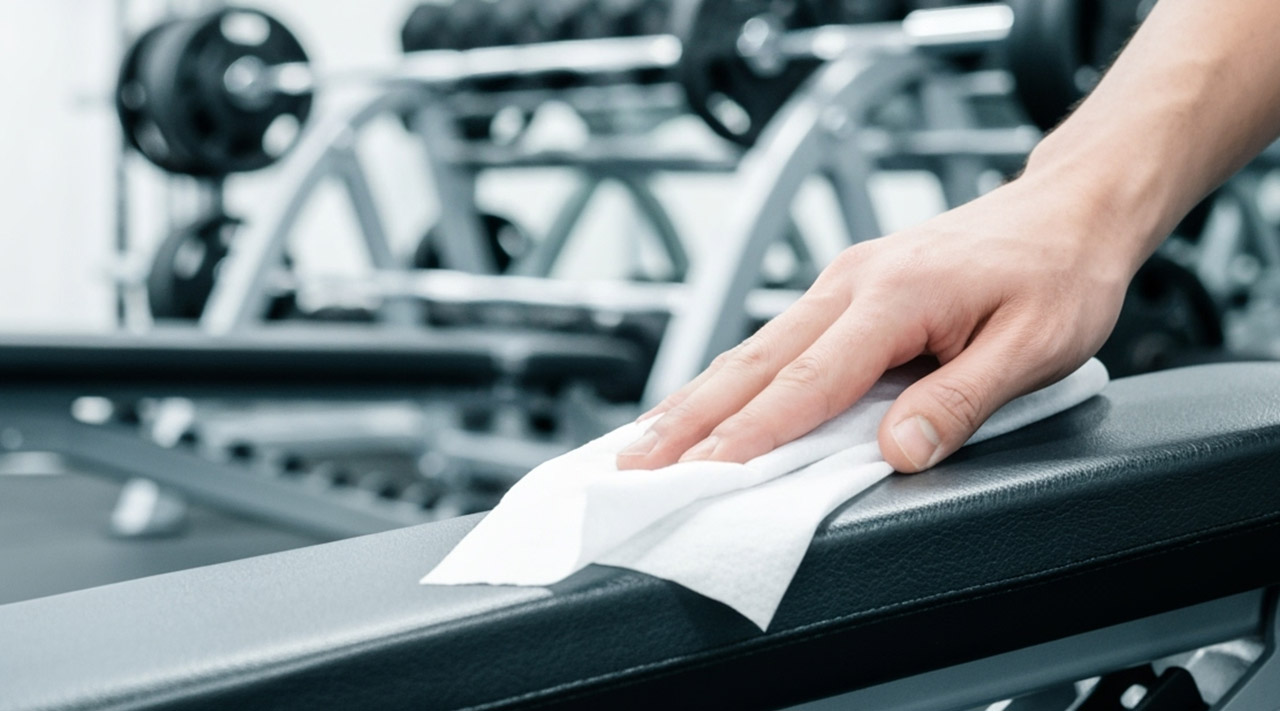
This guide covers the equipment that most reliably needs daily sanitising, plus what many facilities miss. What counts as “daily sanitisation” in a gym? Daily sanitisation means using a suitable disinfectant on high touch surfaces at least once every day, ideally with extra passes during peak times. It is different from basic wiping because it focuses on killing germs, not just removing visible sweat. With gym cleaning services, many facilities use a two step approach: clean first if grime is present, then disinfect for the correct contact time stated on the label. Which cardio machines require daily sanitisation? All cardio machines should be sanitised daily because hands, faces, and sweat routinely contact them. Consoles and grips are the highest risk surfaces. Prioritise treadmills, bikes, rowers, ellipticals, stair climbers, and ski ergs. Focus on touchpoints such as handrails, speed and incline buttons, emergency stop clips, seat and adjustment levers, and heart rate sensors. What strength machines should be sanitised every day? Pin loaded and plate loaded machines need daily sanitisation because users cycle through them quickly and touch the same handles repeatedly. Upholstery also absorbs sweat, which can linger even if it looks dry. Clean and disinfect handles, adjustment knobs, seat backs, headrests, shin pads, and weight pins. Cable machine attachments and selector pins deserve special attention because they are handled constantly. Which free weights and accessories need daily disinfecting? Free weights should be disinfected daily, and many gyms will do it multiple times a day. Their surfaces are repeatedly grabbed and often placed on floors or benches. Include dumbbells, kettlebells, barbells, EZ bars, weight plates, collars, and grips. Do not forget smaller items like resistance bands, ab wheels, push up handles, ankle straps, and lifting straps if the gym provides communal ones. Do benches and upholstery require daily sanitisation? Yes, benches require daily sanitisation because they collect sweat, skin contact, and clothing fibres. Even with towel policies, contact is unavoidable during busy sessions. Sanitise flat, incline, and decline benches, preacher pads, box pads, and any vinyl covered seating in the training area. If there are rips, cleaning becomes less effective, so they should repair or replace damaged upholstery. What functional training equipment should be cleaned daily? Functional zones mix high intensity movement with shared equipment, which increases touch frequency. Daily sanitisation is essential to keep the space safe and pleasant. Target medicine balls, slam balls, battle ropes, TRX straps and handles, plyo boxes, agility ladders, cones, sandbags, and sled handles. Mats used for stretching, Pilates, or circuits should also be disinfected daily, especially around edges and corners. Which group studio surfaces need daily sanitisation? Studios should be sanitised daily because classes pack people into shared air and shared kit. Equipment often rotates quickly between sessions. Clean and disinfect yoga mats (if communal), foam rollers, blocks, bolsters, spin bike touchpoints, step platforms, and shared microphones or remote controls. Floors in studio spaces should be disinfected daily, particularly along high traffic routes. What high touch “non equipment” areas still need daily sanitising? Gyms often focus on machines and forget the contact points that members use every visit. These surfaces can be as high risk as weights. Include door handles, locker handles, reception counters, touch screens, water fountain buttons, vending machine buttons, shared pens, light switches, and stair rails. If there are tablet check in stations, sanitise the screen and stand. Do changing rooms and showers require daily sanitisation? Yes, they need daily sanitisation because they are warm, humid environments with frequent bare skin contact. They also influence member perception more than almost any other area. Disinfect locker doors, benches, hair dryer buttons, taps, shower handles, toilet flush plates, and baby change stations. Floors should be cleaned and disinfected daily with a process designed for wet areas to reduce slip risk. What should they sanitise multiple times per day, not just daily? Some items deserve more than a daily pass because they are touched constantly during peak hours. If their footfall is high, once a day is not enough to keep standards consistent. Key examples are dumbbells, cable attachments, treadmill handrails, touch screens, door handles, and changing room touchpoints. Many facilities schedule quick disinfecting rounds every one to two hours at busy times. What equipment is commonly missed during daily cleaning? The most missed items are the small things that are handled often but cleaned rarely. These gaps are where hygiene standards quietly fall. Watch for weight pins, barbell collars, adjustment levers, timer buttons, clipboards, shared tablets, jump ropes, and stretching area props. Also check wall mounted items like sanitiser dispensers and paper towel levers because everyone touches them. How can they build a daily sanitisation checklist that actually works? A workable checklist is short, specific, and tied to zones, not staff memory. It should list exact touchpoints, not vague categories like “clean cardio”. They can split tasks into opening clean, mid day touchpoint rounds, and closing deep clean. Each zone should have a sign off box, plus a clear note on the disinfectant used and required contact time. Learn more about : Clinical Cleaning Services: What Standards Apply to Medical Environments? What is the simplest rule to decide what needs daily sanitisation? If their members touch it with hands or skin, or breathe near it while sweating, it needs daily sanitisation. If it is used by many people per hour, it probably needs more than daily. That simple rule catches most equipment, keeps priorities clear, and helps their team clean consistently even when the gym is busy. FAQs (Frequently Asked Questions) What does daily sanitisation in gyms involve and why is it important? Daily sanitisation in gyms involves using suitable disinfectants on high touch surfaces at least once every day, ideally with extra cleaning during busy hours. It focuses on killing germs, not just removing visible sweat, to break the chain of contact and reduce the spread of infections among members. Which gym equipment requires daily sanitising? All high-touch gym equipment requires daily sanitising. This includes cardio machines like treadmills and

Scroll to Top