
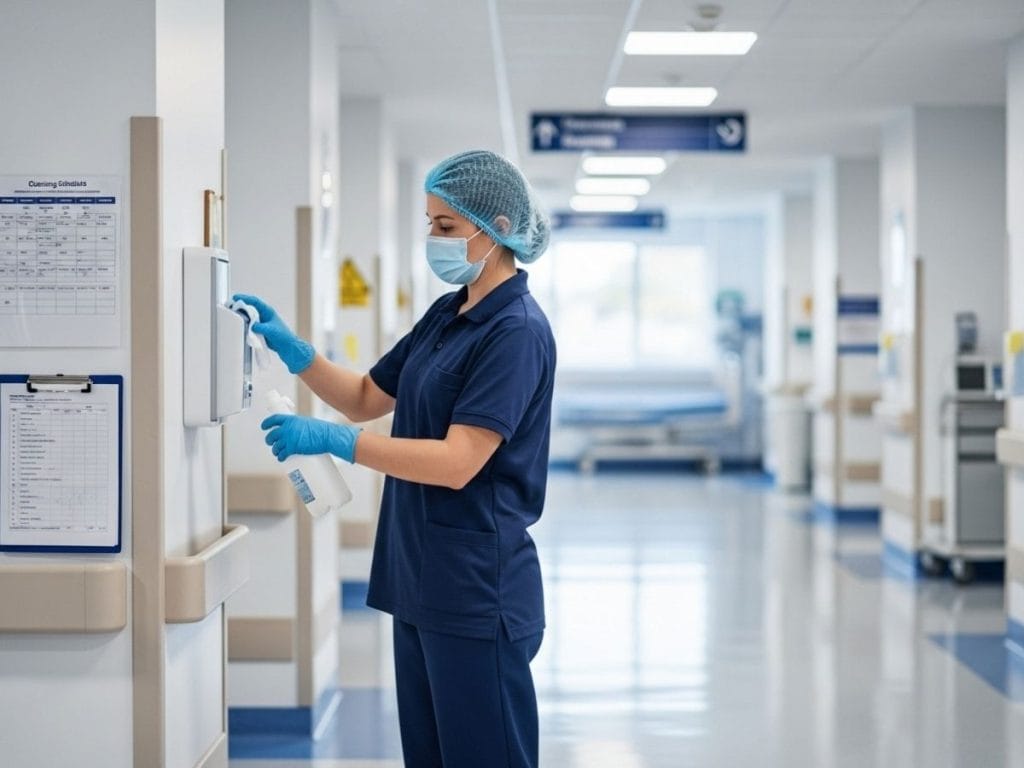
Clinical Cleaning Services: What Standards Apply to Medical Environments?
The exact standards that apply depend on the setting, such as a GP practice versus an operating theatre, but the core principles are the same: prevent cross-contamination, use validated methods, and prove the work was done correctly. What makes clinical cleaning different from general commercial cleaning? Clinical cleaning focuses on infection prevention, not appearance. They clean to a defined specification that targets pathogens on high-touch and high-risk surfaces, with clear rules for products, dwell times, and sequencing. With clinical cleaning services, tasks are separated by risk, colour-coded materials are used, and all work is documented. In most sites, “cleaning” and “disinfection” are treated as distinct steps, with a disinfectant chosen for the organisms and surfaces involved. Which infection prevention and control (IPC) expectations usually apply? They typically align cleaning procedures with the facility’s IPC policy and risk assessment. That means cleaning frequencies, methods, and product choices reflect how the space is used and who uses it. Most medical sites also expect staff to follow hand hygiene rules, wear appropriate PPE, and apply “clean to dirty” and “top to bottom” techniques. Where required, they also follow isolation room rules and transmission-based precautions. What standards govern risk zoning in medical facilities? They usually use zoning to match cleaning intensity to clinical risk. Areas are commonly grouped into low-risk (administrative), medium-risk (consulting rooms), and high-risk (procedure rooms), with the strictest controls in theatres and sterile services. Zoning affects everything: tools, cloths, mop heads, storage, and even staff movement. The aim is to stop microorganisms being carried from higher bioburden areas into cleaner zones. What is the difference between cleaning, disinfection, and sterilisation? Cleaning removes soil and organic matter, which can shield microbes. Disinfection uses a chemical or process to kill many microorganisms on surfaces, but it does not reliably destroy bacterial spores unless it is a sporicidal product used correctly. Sterilisation is a separate, controlled process intended to eliminate all forms of microbial life on instruments. Clinical cleaners generally support sterilisation workflows by cleaning environments and non-critical surfaces, while instrument reprocessing is handled under dedicated decontamination standards. Which chemical and product standards typically matter in healthcare settings? They usually select products that are approved for healthcare use and suitable for the surface, contact time, and target organisms. Labels and safety data sheets (SDS) are treated as mandatory instructions, not suggestions. Facilities often require evidence that disinfectants are effective against relevant pathogens and that dilution, dwell time, and application method are controlled. They also expect secure storage, correct decanting practices, and clear bottle labelling to prevent chemical errors. What cleaning protocols are expected for high-touch points and shared equipment? They prioritise high-touch surfaces like door handles, bed rails, call buttons, taps, chair arms, switches, and reception counters. These are typically cleaned and disinfected more frequently than floors or low-touch walls. Shared equipment adds extra requirements. They may need between-patient disinfection, single-use wipes, and documented checks for items such as examination couches, blood pressure cuffs, keyboards, and touchscreen devices, depending on local policy. How do they manage colour coding, segregation, and cross-contamination controls? They commonly use colour-coded cloths, mop heads, and buckets to keep bathrooms, general areas, and clinical spaces separate. This is paired with rules on where equipment can be taken, how it is transported, and where it is laundered. They also manage waste streams carefully, separating general waste from clinical waste and sharps, and ensuring bins are correctly lined, labelled, and never overfilled. The goal is to prevent microbes and contaminants moving across zones. What training and competency standards should clinical cleaning staff meet? They should be trained in IPC basics, correct chemical use, PPE selection, manual handling, and how to clean specific clinical areas. Competency is usually demonstrated through supervised sign-off, refresher training, and periodic observation. Medical sites also expect staff to understand escalation steps, such as what to do after a blood or body fluid spill, how to report hazards, and when a room must be taken out of service until it is cleaned to standard. What documentation and auditing standards are typically required? They usually require documented schedules, method statements, risk assessments, and cleaning logs. Many facilities also require a signed record for high-risk areas and periodic deep cleans, including what was cleaned, when, and with which product. Auditing is often routine. They may use visual inspections, ATP testing, fluorescent markers, or other verification methods depending on the site’s governance. If results fall short, they expect corrective action and retraining, not just a re-clean. How do clinical cleaning services handle spills, outbreaks, and terminal cleaning? They follow defined spill kits and procedures for blood and body fluids, including PPE, safe disposal, and disinfectant selection. Timing matters, since delays increase exposure risk and can spread contamination. During outbreaks, they may increase frequency, change products, or apply enhanced disinfection with a focus on touch points and shared spaces. Terminal cleaning, such as after isolation or infectious cases, is typically a step-by-step process with strict sequencing, waste handling, and sign-off. Related : Gym Cleaners: What Equipment Requires Daily Sanitisation? What should they look for when choosing a clinical cleaning provider? They should look for evidence of healthcare experience, IPC-aligned processes, trained staff, and transparent quality control. Strong providers can explain their zoning approach, product rationale, verification methods, and how they handle incidents. They should also confirm insurance, staff vetting, continuity plans, and clear communication with the facility’s IPC lead. In healthcare, the “standard” is not a promise; it is a documented system that can be audited at any time. FAQs (Frequently Asked Questions) What distinguishes clinical cleaning from general commercial cleaning in healthcare settings? Clinical cleaning is specifically designed to prevent infection rather than just improve appearance. It follows defined specifications targeting pathogens on high-touch and high-risk surfaces, uses validated methods including specific products with controlled dwell times, separates tasks by risk using colour-coded materials, and requires thorough documentation. Unlike general cleaning, it treats cleaning and disinfection as distinct steps tailored to the organisms and surfaces involved. Which infection prevention and control