

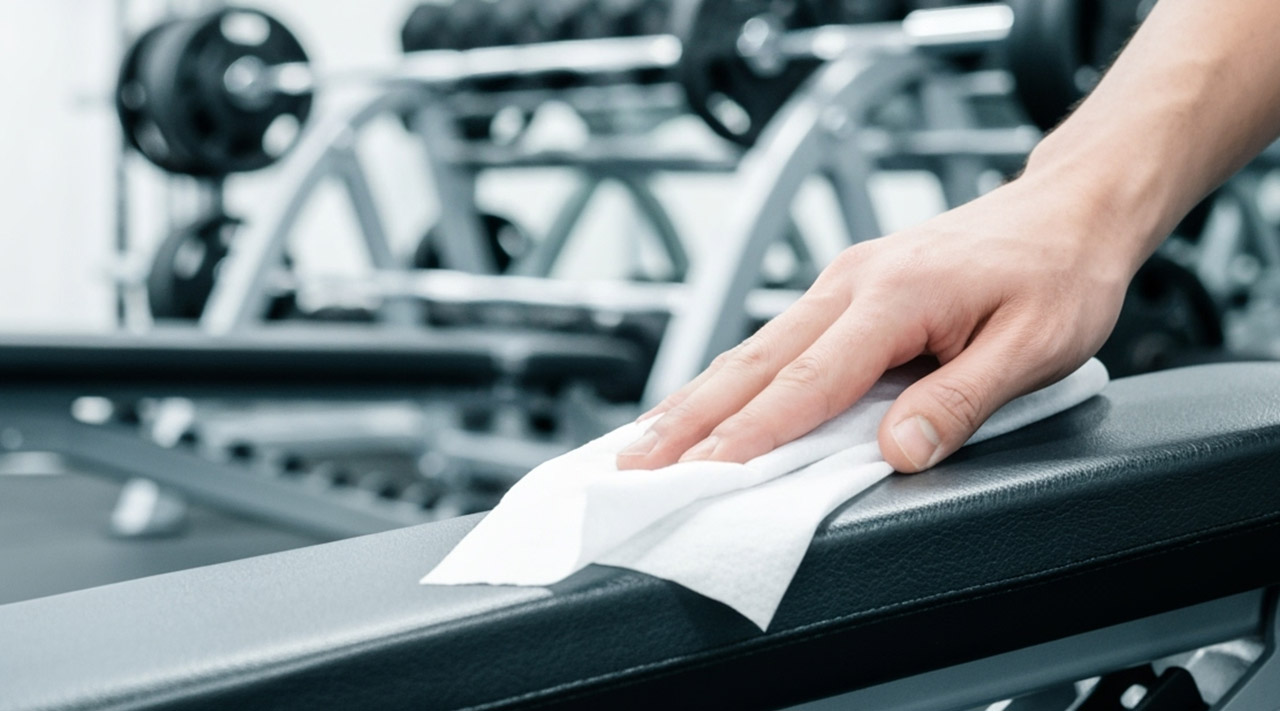
This guide covers the equipment that most reliably needs daily sanitising, plus what many facilities miss.
What counts as “daily sanitisation” in a gym?
Daily sanitisation means using a suitable disinfectant on high touch surfaces at least once every day, ideally with extra passes during peak times. It is different from basic wiping because it focuses on killing germs, not just removing visible sweat.
With gym cleaning services, many facilities use a two step approach: clean first if grime is present, then disinfect for the correct contact time stated on the label.
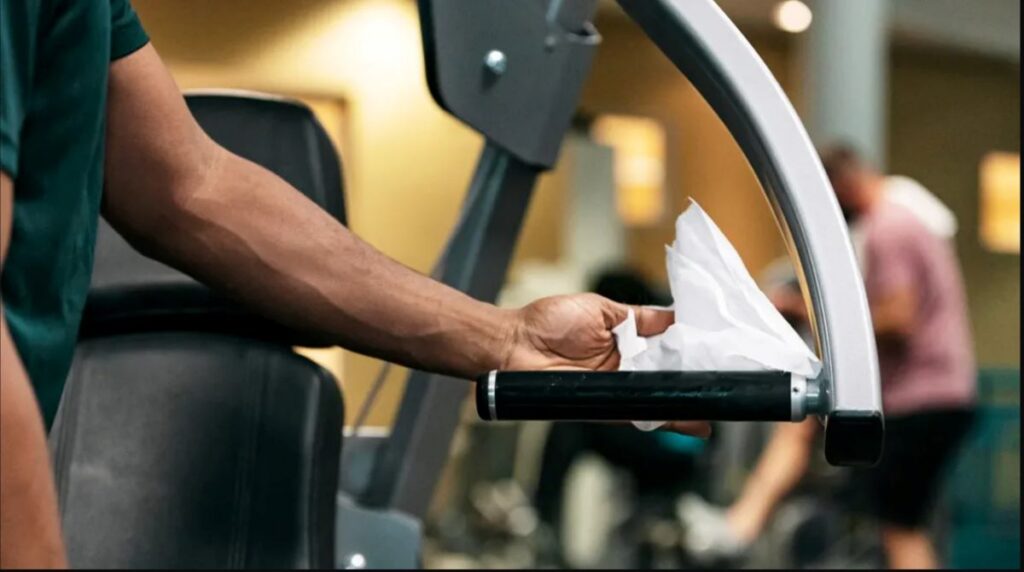
Which cardio machines require daily sanitisation?
All cardio machines should be sanitised daily because hands, faces, and sweat routinely contact them. Consoles and grips are the highest risk surfaces.
Prioritise treadmills, bikes, rowers, ellipticals, stair climbers, and ski ergs. Focus on touchpoints such as handrails, speed and incline buttons, emergency stop clips, seat and adjustment levers, and heart rate sensors.
What strength machines should be sanitised every day?
Pin loaded and plate loaded machines need daily sanitisation because users cycle through them quickly and touch the same handles repeatedly. Upholstery also absorbs sweat, which can linger even if it looks dry.
Clean and disinfect handles, adjustment knobs, seat backs, headrests, shin pads, and weight pins. Cable machine attachments and selector pins deserve special attention because they are handled constantly.
Which free weights and accessories need daily disinfecting?
Free weights should be disinfected daily, and many gyms will do it multiple times a day. Their surfaces are repeatedly grabbed and often placed on floors or benches.
Include dumbbells, kettlebells, barbells, EZ bars, weight plates, collars, and grips. Do not forget smaller items like resistance bands, ab wheels, push up handles, ankle straps, and lifting straps if the gym provides communal ones.
Do benches and upholstery require daily sanitisation?
Yes, benches require daily sanitisation because they collect sweat, skin contact, and clothing fibres. Even with towel policies, contact is unavoidable during busy sessions.
Sanitise flat, incline, and decline benches, preacher pads, box pads, and any vinyl covered seating in the training area. If there are rips, cleaning becomes less effective, so they should repair or replace damaged upholstery.
What functional training equipment should be cleaned daily?
Functional zones mix high intensity movement with shared equipment, which increases touch frequency. Daily sanitisation is essential to keep the space safe and pleasant.
Target medicine balls, slam balls, battle ropes, TRX straps and handles, plyo boxes, agility ladders, cones, sandbags, and sled handles. Mats used for stretching, Pilates, or circuits should also be disinfected daily, especially around edges and corners.
Which group studio surfaces need daily sanitisation?
Studios should be sanitised daily because classes pack people into shared air and shared kit. Equipment often rotates quickly between sessions.
Clean and disinfect yoga mats (if communal), foam rollers, blocks, bolsters, spin bike touchpoints, step platforms, and shared microphones or remote controls. Floors in studio spaces should be disinfected daily, particularly along high traffic routes.
What high touch “non equipment” areas still need daily sanitising?
Gyms often focus on machines and forget the contact points that members use every visit. These surfaces can be as high risk as weights.
Include door handles, locker handles, reception counters, touch screens, water fountain buttons, vending machine buttons, shared pens, light switches, and stair rails. If there are tablet check in stations, sanitise the screen and stand.
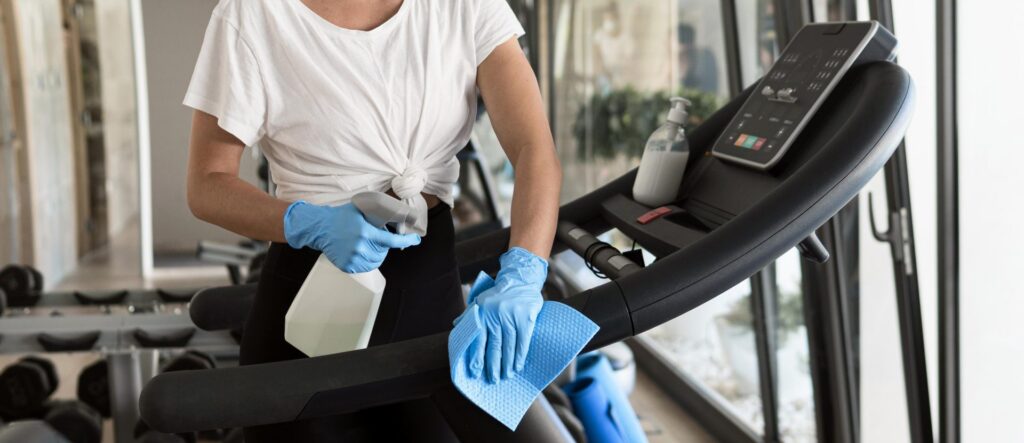
Do changing rooms and showers require daily sanitisation?
Yes, they need daily sanitisation because they are warm, humid environments with frequent bare skin contact. They also influence member perception more than almost any other area.
Disinfect locker doors, benches, hair dryer buttons, taps, shower handles, toilet flush plates, and baby change stations. Floors should be cleaned and disinfected daily with a process designed for wet areas to reduce slip risk.
What should they sanitise multiple times per day, not just daily?
Some items deserve more than a daily pass because they are touched constantly during peak hours. If their footfall is high, once a day is not enough to keep standards consistent.
Key examples are dumbbells, cable attachments, treadmill handrails, touch screens, door handles, and changing room touchpoints. Many facilities schedule quick disinfecting rounds every one to two hours at busy times.
What equipment is commonly missed during daily cleaning?
The most missed items are the small things that are handled often but cleaned rarely. These gaps are where hygiene standards quietly fall.
Watch for weight pins, barbell collars, adjustment levers, timer buttons, clipboards, shared tablets, jump ropes, and stretching area props. Also check wall mounted items like sanitiser dispensers and paper towel levers because everyone touches them.
How can they build a daily sanitisation checklist that actually works?
A workable checklist is short, specific, and tied to zones, not staff memory. It should list exact touchpoints, not vague categories like “clean cardio”.
They can split tasks into opening clean, mid day touchpoint rounds, and closing deep clean. Each zone should have a sign off box, plus a clear note on the disinfectant used and required contact time. Learn more about : Clinical Cleaning Services: What Standards Apply to Medical Environments?
What is the simplest rule to decide what needs daily sanitisation?
If their members touch it with hands or skin, or breathe near it while sweating, it needs daily sanitisation. If it is used by many people per hour, it probably needs more than daily.
That simple rule catches most equipment, keeps priorities clear, and helps their team clean consistently even when the gym is busy.
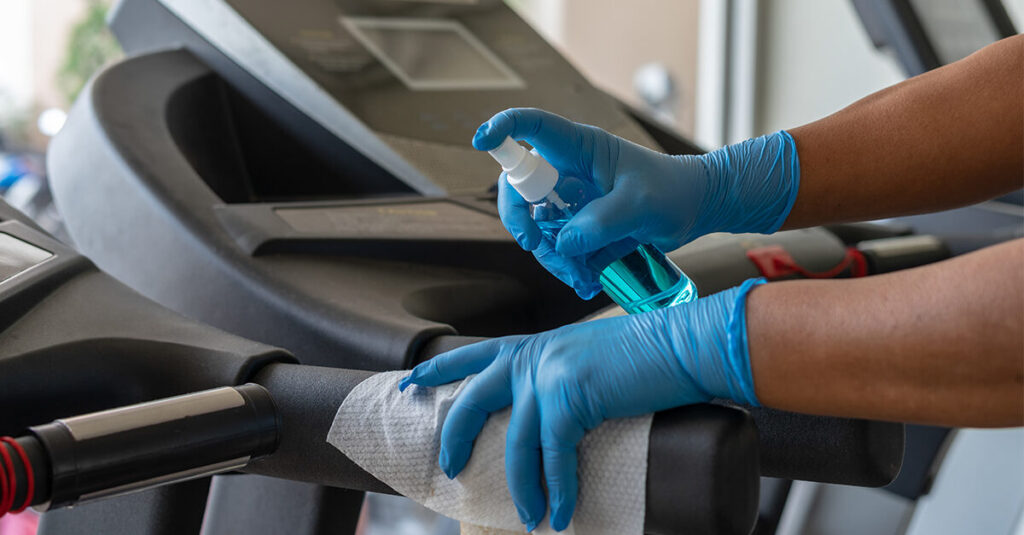
FAQs (Frequently Asked Questions)
What does daily sanitisation in gyms involve and why is it important?
Daily sanitisation in gyms involves using suitable disinfectants on high touch surfaces at least once every day, ideally with extra cleaning during busy hours. It focuses on killing germs, not just removing visible sweat, to break the chain of contact and reduce the spread of infections among members.
Which gym equipment requires daily sanitising?
All high-touch gym equipment requires daily sanitising. This includes cardio machines like treadmills and bikes, strength machines such as pin loaded and plate loaded machines, free weights including dumbbells and kettlebells, benches and upholstery, functional training equipment like medicine balls and TRX straps, as well as group studio items like yoga mats and spin bike touchpoints.
Are there non-equipment areas in gyms that need daily sanitisation?
Yes, non-equipment high touch areas also require daily sanitisation. These include door handles, locker handles, reception counters, touch screens, water fountain buttons, vending machine buttons, shared pens, light switches, stair rails, and tablet check-in stations to maintain overall hygiene standards.
How often should changing rooms and showers be sanitised in a gym?
Changing rooms and showers should be sanitised daily because they are warm, humid environments with frequent bare skin contact. Disinfecting locker doors, benches, hair dryer buttons, taps, shower handles, toilet flush plates, baby change stations, and cleaning floors with wet-area safe processes helps maintain cleanliness and member confidence.
Which gym items require multiple sanitising sessions per day instead of just once?
Items that are touched constantly during peak hours need multiple sanitising rounds per day. These include dumbbells, cable attachments, treadmill handrails, touch screens, door handles, and changing room touchpoints. Many facilities perform quick disinfecting rounds every one to two hours during busy times to keep standards consistent.
How can gyms create an effective daily sanitisation checklist?
Gyms can build an effective sanitisation checklist by making it short, specific, and zone-based rather than relying on staff memory. The checklist should list exact touchpoints instead of vague categories like ‘clean cardio’, split tasks into opening cleanings, midday touchpoint rounds, and closing deep cleans. Each zone should have a sign-off box along with notes on the disinfectant used and required contact time.